3rd Places

Bringing back the places between home and work

The everyday gathering places between home and work — storefronts, fellowship halls, corner groceries — restored across seven neighborhoods, anchored by the district at 12th Avenue North and Carraway Boulevard.

About 3rd Places

Every neighborhood that works has places that are neither home nor work — the corner where it does business, the hall where it meets, the counter where it lingers. The Northside’s were taken street by street: the groceries, the theater, the hospital district. This initiative brings them back across all seven neighborhoods — opening the rooms that survived, restoring the corners that didn’t — anchored by the streetcar-era district at 12th Avenue North and Carraway Boulevard, beside one of the largest redevelopment sites in Birmingham.

The Places Between Home and Work

Every neighborhood that works runs on a third set of places — not home, not work, but the rooms and corners in between where the same faces turn up week after week. Nobody hosts and nobody is a guest; nobody checks what you earn at the door; the main thing that happens there is conversation. You can walk in alone, at almost any hour, confident somebody you know will be there. That standing invitation is what turns neighbors into regulars, and regulars into the people who look out for a block.

The country’s top doctor has called what happens without such places a health emergency: lacking social connection carries a mortality risk comparable to smoking fifteen cigarettes a day, and rebuilding the shared places where connection happens is named first among the remedies. And where informal public life disappears, life simply gets more expensive — every comfort a neighborhood once shared has to be bought privately, household by household, by the people least able to afford it.

What Was Taken, and What Held

The Northside knows exactly what that loss looks like, because it happened here street by street. Every neighborhood grocery is gone — from 12th and Carraway, from 26th Street, from the corners of Norwood and Fountain Heights. The North Birmingham theater went dark in 1956, and half a block of the 1920s storefronts near it came down for a parking lot. Carraway hospital closed in 2008 and took thousands of jobs with it. Urban renewal and three interstates did most of the rest of the taking.

But look at what held. Shut out of the city’s front rooms for generations, these neighborhoods built their own gathering places — the barbershop, the beauty salon, the fellowship hall, the neighborhood business district — and that inheritance is still standing. Five of our seven neighborhood associations meet in churches and public buildings today. Eagle’s Restaurant has fed Acipco-Finley since 1951 and Niki’s West since 1957; the Alabama Farmers Market is open every day; the North Birmingham library has anchored its corner for a century. These rooms are not nostalgia. When a heat wave killed hundreds in Chicago in 1995, two adjacent neighborhoods — equally poor, statistically alike — died at rates eleven times apart, and the difference was that one of them had kept its stores, its diners, and its churches. Gathering places are life-safety infrastructure.

The Flagship: 12th & Carraway

Every effort needs a flagship, and ours is the corner where the Northside has always done business: 12th Avenue North at Carraway Boulevard, streetcar-era storefronts a short walk from thousands of front porches. That fabric now sits directly beside the former Carraway hospital campus — The Star Uptown, a $340 million redevelopment whose 9,380-seat amphitheater opened in June 2025 with more than thirty shows in its first season, with 64 new cottages and townhomes breaking ground on Carraway Boulevard in 2026. Investment is no longer a question for this corner. The question is whether the neighborhood owns what happens next.

So the work starts with one table, every stakeholder: residents, district business owners, property owners, congregations, the surrounding developers, and city government, with the workload divided and the responsibilities named. Consensus has a head start — the city’s own framework plan calls for this corner’s revival, and the rezoning the City Council adopted in April 2026 opened these blocks to the mixed-use buildings a working district needs. This table implements an adopted city plan; it is not asking permission for a new idea. [Founding stakeholder roster to be announced.]

The city is already building the stitches: a federally funded two-way cycle track on 15th Avenue North will connect Norwood Boulevard to Carraway Boulevard, running straight past the district, and a planned greenway will walk concert crowds from the amphitheater into the surrounding neighborhoods by fall 2027. And the work runs on the same rails as our housing initiatives — the crews repairing Northside homes are the same trades a storefront rehabilitation needs, and where the graduates of our ARC Workforce Academy find the work a district revival generates.

An Anchor With Its Lights On Every Day

Ask residents what these neighborhoods need and the same answer comes back unprompted, year after year: “We had a grocery store up on 26th Street. We need that back.” This corner had one too — the Bruno’s that opened in 1967 — and from the Fountain Heights core the nearest full-service grocery now sits a mile and a half away, a real tax in bus fare and trip time on every household without a car, with grocery dollars leaving the neighborhood on every trip.

We are honest about what a grocery store is: no store by itself changes what a neighborhood eats. What it does is harder-headed than that. It keeps money circulating on the block. It shortens the hardest trips for the people who make them most. And it is the strongest everyday anchor a commercial corner can have — open daily, for every age, no reason needed — the errand everyone runs, generating the repeat foot traffic that turns strangers into familiar faces and gives every neighboring storefront its customers. One proven anchor pulls a district up around it, and this is the one residents already asked for by name.

A Room Built for the People Who Stayed

The Northside’s older homeowners are the reason there is a neighborhood here to renew. They held these blocks through the closings, the interstates, and the disinvestment, and they are the people every other thing we do is built around — the priority list for Critical Repair, the point of aging in place, the porch that still knows who belongs on the street. They are also, by a wide margin, the residents most likely to spend a day without speaking to anyone. One in three older Americans is lonely, and for an elder who no longer drives, a neighborhood with no gathering place is not merely dull — it is a closed door. Isolation at that age is not a mood. It tracks with high blood pressure, heart disease, cognitive decline, and earlier death, and it is the quiet condition underneath a great many of the emergencies that eventually take an older homeowner out of her house for good.

A senior center is the most concentrated dose of gathering a neighborhood can buy. There are nearly 11,000 of them nationwide serving about a million older adults, and the usage pattern is unlike anything else on this page: three-quarters of participants come one to three times a week and stay more than three hours a visit. That is not a door count. That is a standing appointment with the same faces, which is exactly what the research says slows cognitive decline and what a block needs in order to notice when someone stops showing up. And a good center is never only a day room — it is congregate meals, health screenings, and benefits counseling, which makes it the single best intake desk we could build: the place where the homeowner who qualifies for repair money actually hears about it, from someone she already trusts, before the roof fails. Pair it with the youngest room in the footprint and it does one more job. Roughly 59,000 Alabama grandparents are raising their grandchildren outright, and in these neighborhoods the elder and the child are frequently the same household arriving in the same car.

The Third Place That Holds the Whole Family

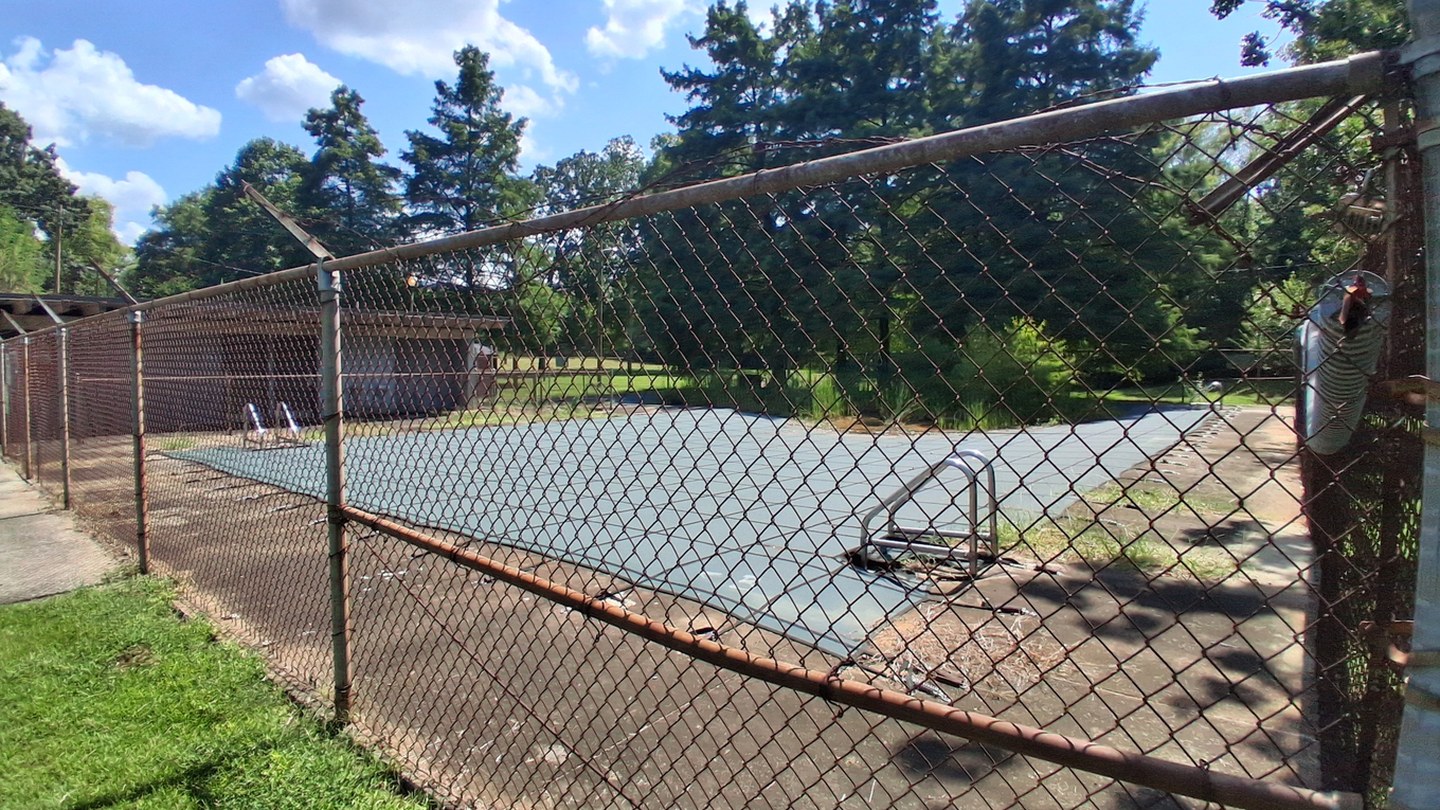
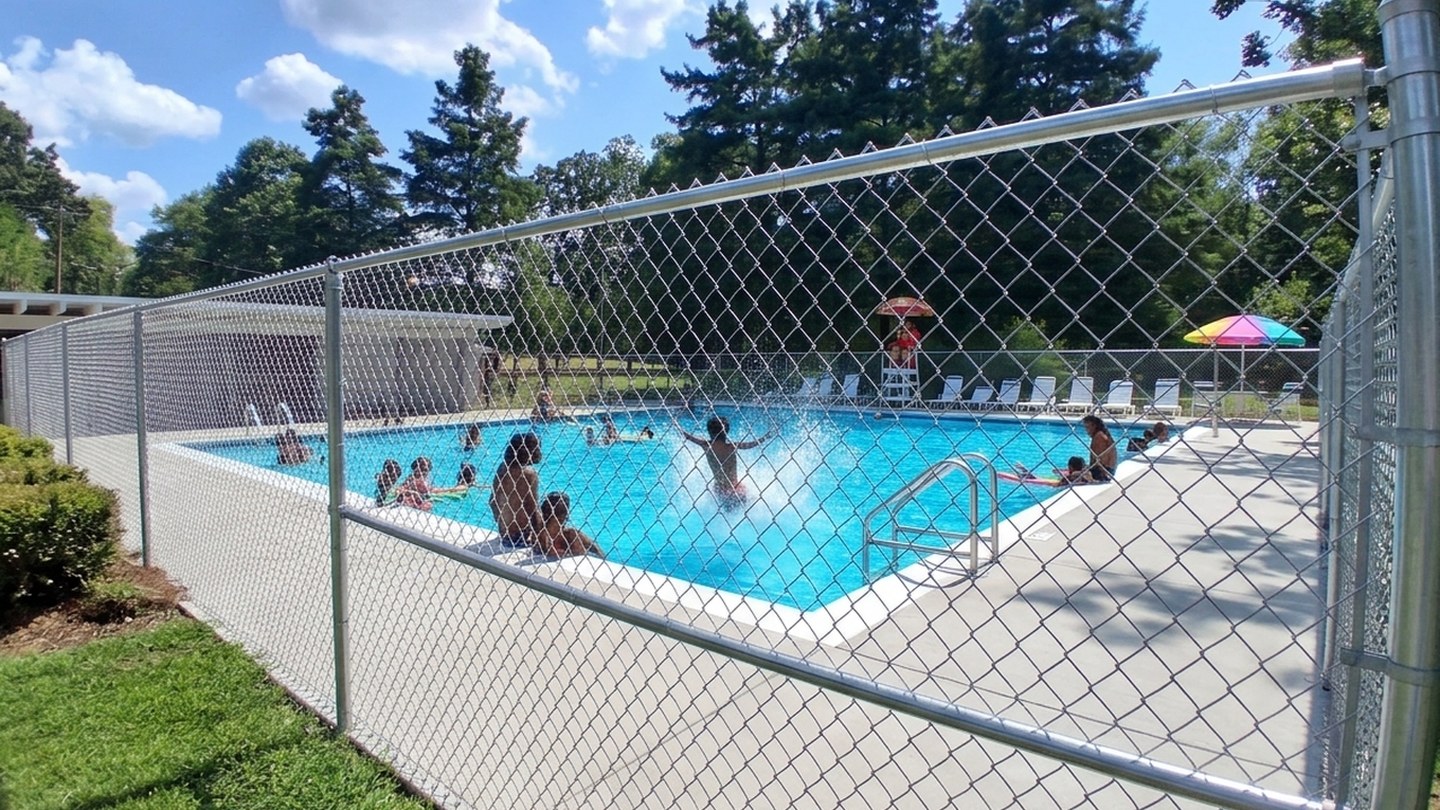
Sociologist Ray Oldenburg coined the term “third place” for the spaces that aren’t home or work-and-school — the barbershops, diners, and porches where community life actually happens. A neighborhood pool is one of the purest examples of the form, and it’s nearly unique in working for the whole family at once. Most third places serve one generation at a time: the coffee shop belongs to adults, the playground to toddlers and their minders, the rec league to one age bracket. A pool holds everybody in the same place at the same hour — the baby in the zero-entry shallows, the eight-year-old in a cannonball contest, the teenager in the guard chair, the parents on the deck, the grandmother doing laps in the morning lane. Very few spaces in American life still do that.

For families, that shared geography solves a real problem: modern family time is mostly logistics. Parents spend their evenings driving children to separate, age-sorted activities and watching from the sidelines. The pool is one of the few outings where nobody is only a spectator and nobody is only a chauffeur. A parent can swim with a toddler, watch an older kid from a chair, and talk with a neighbor — simultaneously. It’s leisure that doesn’t have to be divided up, which is why we spent the summer at the pool is a family memory in a way that we spent the summer in the minivan never is.

For the kids themselves, the pool offers a kind of scaffolded freedom that’s nearly extinct. The water is the activity — no program, no fee at the door, no adult running the game — so children negotiate their own play, mix across ages and schools and blocks, and do it all stripped of the status signals (shoes, phones, clothes) that govern every other space where they gather. Yet parents can grant that independence without anxiety, because the pool is enclosed, staffed, and full of familiar adults. The lifeguard chair is supervision without surveillance. Kids get autonomy; parents get peace of mind; both get it in the same fenced acre.

The pool also builds a life-saving skill as a side effect of hanging out. Drowning is a leading cause of death for young children, and swimming ability tracks closely with access: families who live near an open, affordable pool raise swimmers, and that competence passes down — parents who swim teach kids who swim. Where public pools closed and were never replaced, whole family lines lost the skill. Sustaining a community pool is a public-safety investment dressed up as recreation.

Finally, pools give families shared rituals and give neighborhoods their glue. Swim lessons, night swims, the end-of-summer cookout — these put the same families in front of each other week after week, which is how parents on the deck become actual neighbors, how teenagers land their first jobs at the concession stand, and how a subdivision or a block becomes a community. When a pool closes, a neighborhood doesn’t just lose a place to swim. It loses the one third place that welcomed the whole household at once — and those don’t come back easily.
Before: the locked front gate of the closed Norwood pool, reopened with the water full and children swimming
After: the locked front gate of the closed Norwood pool, reopened with the water full and children swimming
↔
TODAYWHAT IT COULD BE
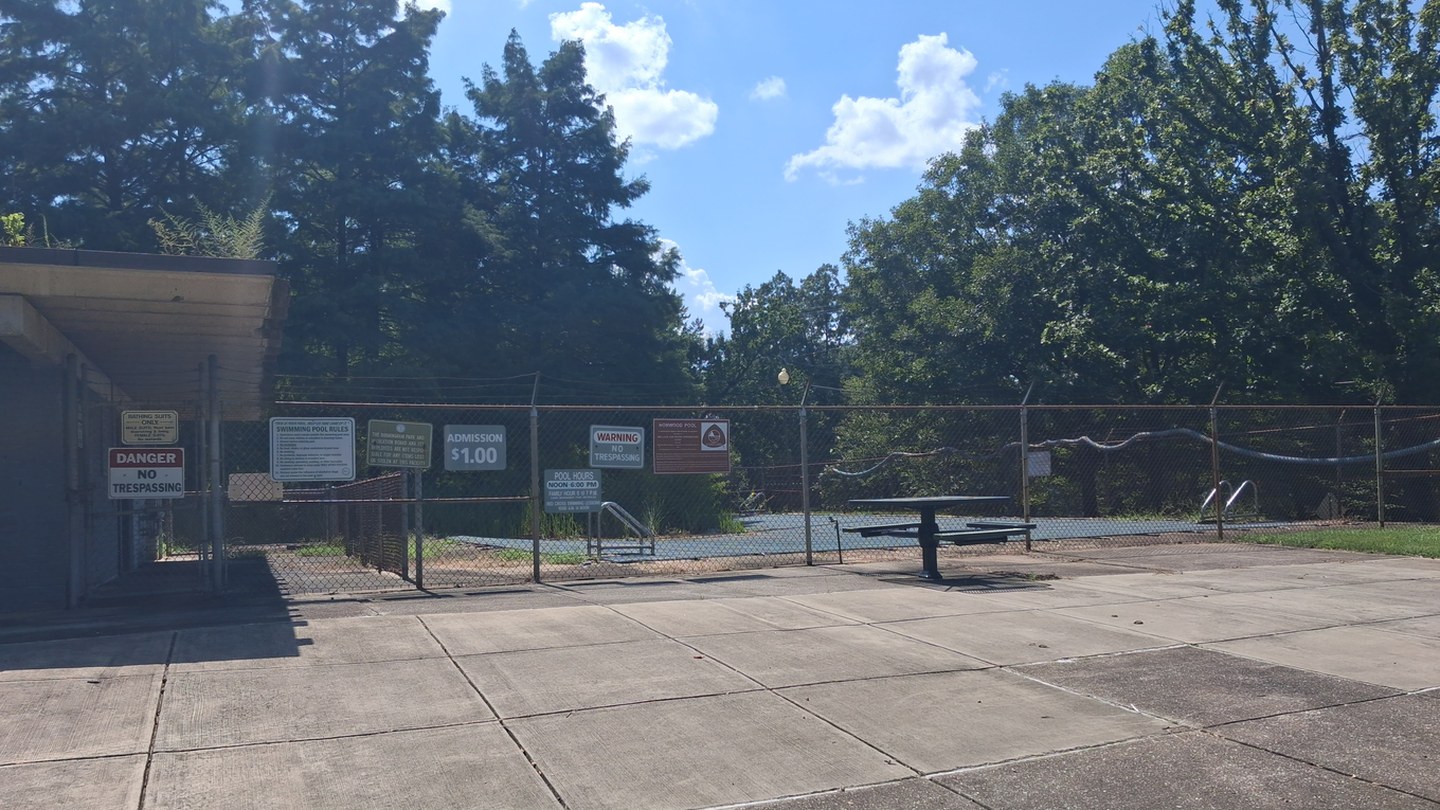
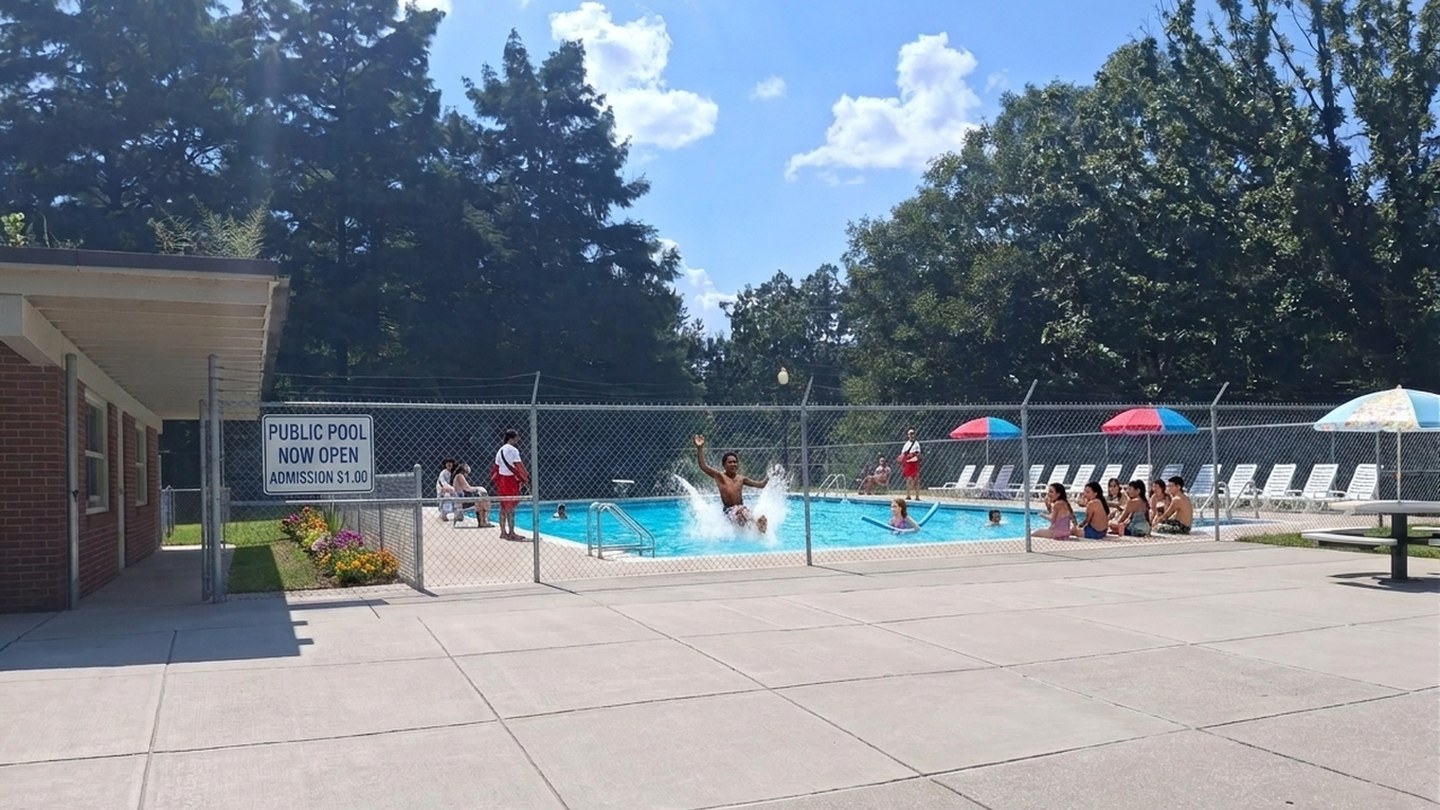
Before: the rusted fence line of the closed Norwood pool, restored with clean fencing and a pool full of swimmers
After: the rusted fence line of the closed Norwood pool, restored with clean fencing and a pool full of swimmers
↔
TODAYWHAT IT COULD BE

The “before” image is a real photograph of a closed neighborhood pool; the “after” is a concept rendering to spark conversation — not a funded plan. Real projects follow community input and the City’s planning process.

Somewhere You Can Actually Finish Your Coffee

Buying the coffee was never the problem. The problem is where you drink it — in the car, in the pickup line, at a temperature that stopped being nice twenty minutes ago. You have tried the alternative. You order something, you sit down, and you spend the entire visit saying we don’t touch that until you leave with three-quarters of a latte and a two-year-old melting down in the doorway. So you stop trying. You text a friend we should get coffee sometime, you both mean it, and then it has been eight months. And on these blocks plenty of the women you’d be texting are doing all of this with grandkids, on the second round, which somehow makes it even less likely that anybody ever sits down.

What fixes it is unglamorous and very specific: one room, real coffee, and a fenced play area you can see from every single table. Not a drop-off. Not a play place with a sad machine in the corner. A coffee shop where you can watch your kid on the climber without standing up — which is the whole difference between an outing you survive and an hour that is actually yours. Makers up US-31 worked this out and the place is packed, and not because the north end of the county was short on lattes. It was short on anywhere a mother could sit down. We could have that here, and honestly it’s the cheapest idea on this page to try — a rented storefront, secondhand climbing foam, and somebody behind the counter who knows your name and your kid’s name by the third week. You’d know inside one summer whether it worked, because you’d have four numbers in your phone you didn’t have in May.

Fellowship Halls on a Tuesday

The strongest national research on how children rise out of poverty points to something disarmingly simple: friendships that cross class lines. And no setting in American life builds those friendships more reliably than congregations — the rooms where what counts is who you are, not what you earn. The Northside has a network of churches anchoring its blocks, and studies of historic sacred places find that most of the people served by the programs in their buildings never attend a service there.

That makes the fellowship hall on a weekday the cheapest new gathering place in the footprint — the rooms are already built, already trusted, and empty six days a week. Shared-use partnerships that open those halls Monday through Saturday — for meals, tutoring, health screenings, association meetings — turn a Sunday-peaked building into a seven-day one, and the grant that funded a new family-life center at Bethel Baptist in Collegeville shows the funding rail already runs here. This work is of a piece with everything on our Churches page.

The Rooms That Already Work

Some of the best results in American public health have come from meeting people in the barber’s chair — the one room where men stay an hour past the haircut, and where the keeper of the shop is trusted in a way no institution is. The same goes for the salon, the laundromat, the diner counter, the branch library: rooms where the neighborhood already spends its time, kept by people the neighborhood already knows.

So before we build anything, we go where the dwell-time already is: mapping the shops and their keepers, and putting programs, sign-ups, and word of mouth in the rooms people already sit in — starting with our own Critical Repair outreach, so no application window opens or closes without these neighborhoods hearing about it from someone they trust.

Start Cheap, Start Now

The rules for anything this initiative opens, funds, or helps run: the host is the hire, not the buildout — a plain room with a gifted keeper beats a beautiful room without one. Plain and cheap is a feature; long hours and permission to linger are the point; and the gathering function must never depend on the till — revenue gets stacked, or subsidy does. Test everything with folding chairs and a market day before any capital is spent, and measure what matters: conversations and repeat visitors, not door counts.

And the cheapest proven move comes first. When Philadelphia cleaned, greened, and maintained hundreds of vacant lots — grass, a few trees, a low fence — gun assaults in its poorest neighborhoods fell by nearly a third. Our Infill Development initiative is assembling exactly those lots; keeping every one of them clean, green, and cared for until the day it is built on makes the block safer now and the eventual homes easier to build.

A Proven Way of Working

We are not inventing a method. The district work runs the four points that have revived traditional commercial districts nationwide — organization, promotion, design, and economic vitality — and keeps the discipline that comes with them: comprehensive rather than one-shot, incremental rather than overnight, self-help rather than waiting to be saved, built on the district’s existing assets, and measured in completed, visible projects.

Birmingham has already watched this model work — in Woodlawn and in the Historic 4th Avenue Business District, where organized, patient district work put storefronts back in business, and in 2024 won a $14.5 million federal grant to reknit the streets around it. Organized districts attract investment that unorganized corners never see. 3rd Places is the Northside’s turn.

Our Other Initiatives

Infill Development

New homes on the vacant lots between the homes that never left — small buildings, built steadily, by builders from these blocks — so the neighborhood fills back in without being torn down and started over.

Learn More
Critical Repair Program

Health-and-safety repairs — roofing, electrical, plumbing, heating and cooling, structural — that keep a legacy homeowner in the house they already own, instead of losing it one leak at a time.

Learn More
ARC Workforce Academy

A registered apprenticeship building electricians and mechanical tradespeople from these blocks — paid on-the-job training instead of tuition debt, and a career at the end of it.

Learn More
Community Investment

Small-business financing for Northside residents — so the investment coming to these blocks is owned by the people who live on them.

Learn More

A roof patched, a lot cleared, a child read to — on the Northside, each one starts with someone who showed up.

Volunteer with Northside Initiative

Come work a Saturday. Homeowner repair crews, vacant lot clean-ups, and tutoring all run on volunteer hours.

Volunteer Today
Stand with the Northside

Congregations, businesses, and organizations carry this plan together. If yours wants a lane, there is one open.

Partner With Us